
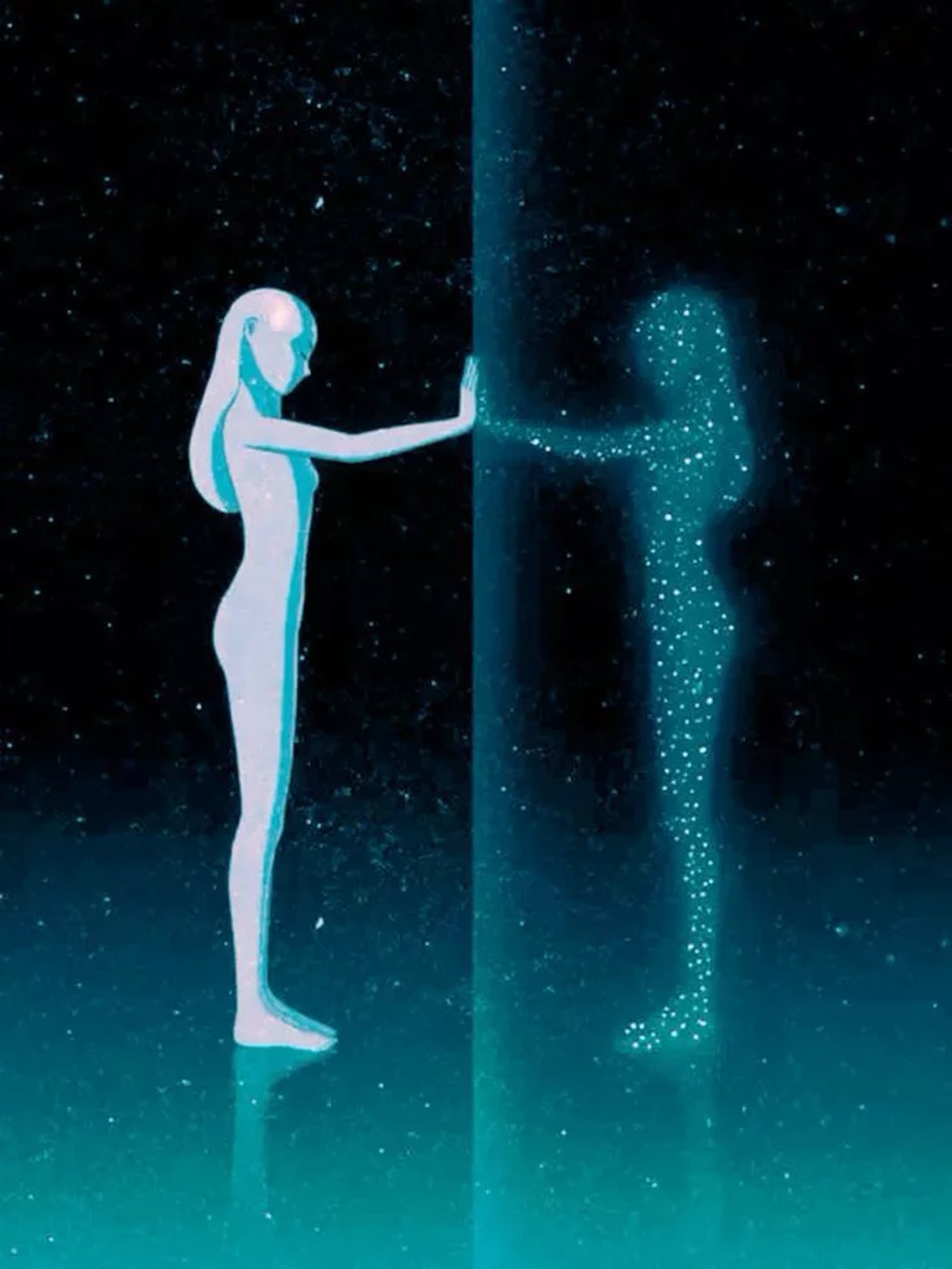
Why we split ourselves into “good” and “bad” - shadow integration and the psychology of the self
Why do people suppress parts of themselves to appear “good,” strong, pure, or acceptable? Explore shadow integration, dual thinking, inner conflict, and the psychology behind the mask and the shadow.
OVERTHINKING & INNER STRUGGLES
Alena
5/8/20263 min read
Why we split ourselves into “good” and “bad”
Most people are not suffering because they are “bad.”
They are suffering because they are trying too hard to become only “good.”
Good enough. Pure enough. Strong enough. Smart enough. Controlled enough.
And in the process, they quietly exile entire parts of themselves:
anger,
sexuality,
vulnerability,
selfishness,
ambition,
softness,
aggression,
emotional needs.
Psychology calls this fragmentation.
Jung called the rejected side of the personality the shadow.
And the more we reject parts of ourselves, the more disconnected we become from who we actually are.
Main article
The problem with dual thinking
Human beings naturally categorize things.
Good or bad.
Strong or weak.
Moral or immoral.
Successful or worthless.
Dual thinking helps the brain simplify reality. But psychologically, it creates a dangerous trap.
Because the moment you fully identify with one side, you automatically begin rejecting the opposite side inside yourself.
A person obsessed with being “strong” becomes ashamed of vulnerability.
A person obsessed with purity suppresses sexuality.
A person obsessed with kindness represses anger.
A person obsessed with intelligence starts fearing mistakes, confusion, or simplicity.
This is where the internal split begins.
The mask and the shadow
Every socially accepted identity creates a mask.
The “strong one.”
The “good girl.”
The “perfect mother.”
The “logical man.”
The “nice person.”
The mask is not fake by itself. It usually contains real qualities.
The problem begins when a person becomes emotionally dependent on maintaining that image.
Because then everything that contradicts the mask gets pushed into the unconscious.
That rejected side becomes the shadow.
The shadow is not “evil.”
It is simply the parts of yourself you learned were unsafe, embarrassing, shameful, or unacceptable.
And the shadow does not disappear just because you deny it.
It waits.
Why suppressed traits return in destructive ways
What we reject psychologically often returns indirectly.
Suppressed anger becomes passive aggression.
Suppressed sexuality becomes shame or obsession.
Suppressed vulnerability becomes emotional numbness.
Suppressed selfishness becomes burnout and resentment.
Many people think healing means removing their darkness.
But psychologically, that is impossible.
Because every trait has both destructive and constructive potential.
Aggression can become violence - or healthy boundaries.
Sexuality can become recklessness - or vitality and connection.
Cunning can become manipulation - or strategy and intelligence.
Weakness can become helplessness - or emotional honesty.
The goal is not elimination.
The goal is integration.
Why shadow integration feels uncomfortable
Shadow work is difficult because it destroys the fantasy that we are only one thing.
Most people unconsciously want certainty:
“I am the good one.”
“I am the victim.”
“I am the strong one.”
“I am never selfish.”
But maturity requires psychological complexity.
A healthy person understands:
they can be loving and angry,
confident and insecure,
sexual and respectable,
strong and emotionally sensitive.
This is called psychological integration.
Not perfection.
Wholeness.
The danger of rejecting vulnerability
One of the most common rejected traits is weakness.
Nobody wants to feel weak.
So people build identities around:
independence,
achievement,
emotional control,
constant strength.
The “hero mask” begins dominating the personality.
But eventually the nervous system pays the price.
A person who never allows weakness often loses:
emotional intimacy,
rest,
playfulness,
softness,
authentic connection.
Strength without vulnerability eventually becomes emotional isolation.
Sexuality and the split identity
Sexuality is another trait people often divide into extremes.
Especially women.
Society historically created two opposing archetypes:
the “pure woman,”
or the “sexual woman.”
As if sexuality automatically removes dignity.
This creates internal fragmentation:
“I can be accepted… but not fully myself.”
Many women learn to suppress parts of themselves in order to remain lovable, respectable, or emotionally safe.
But suppressed sexuality does not disappear.
Often it takes creativity, vitality, spontaneity, and emotional aliveness with it.
Real healing is integration
Healing is not becoming “light only.”
Healing is learning how to hold both sides consciously without being controlled by either.
A psychologically healthy position sounds more like this:
I am not purely good or purely bad.
I am human.
I can be:
strong and vulnerable,
ambitious and caring,
emotional and rational,
sexual and respectful,
imperfect and still worthy.
Real balance exists not in extremes, but in integration.
Because there is darkness inside light, and light inside darkness.
And maturity is the ability to stay conscious in both.
Conclusion
The parts of yourself you reject do not disappear.
They wait:
in triggers,
in projections,
in shame,
in emotional reactions,
in fantasies,
in self-sabotage.
Shadow integration is not about becoming darker.
It is about becoming whole.
And maybe real self-understanding begins the moment you stop asking:
“Which parts of me are acceptable?”
And start asking:
“What happens if I stop abandoning myself?”
If you want to go deeper:
Related articles
The Matrix of Love: Alena_Psycrafter signature framework
How emotional fragmentation shapes attraction, attachment, and relationship dynamics.What love actually is and why most people get it wrong
Why many people confuse attachment, validation, control, and trauma bonding with love.Why you overthink everything and can’t stop
The psychological relationship between control, anxiety, emotional suppression, and mental loops.Love, sex and the truth most people don’t understand (future)
How sexuality, shame, attachment, and emotional safety become psychologically interconnected.The psychology of emotional masks (future)
How survival identities are formed - and why people lose themselves inside roles.