
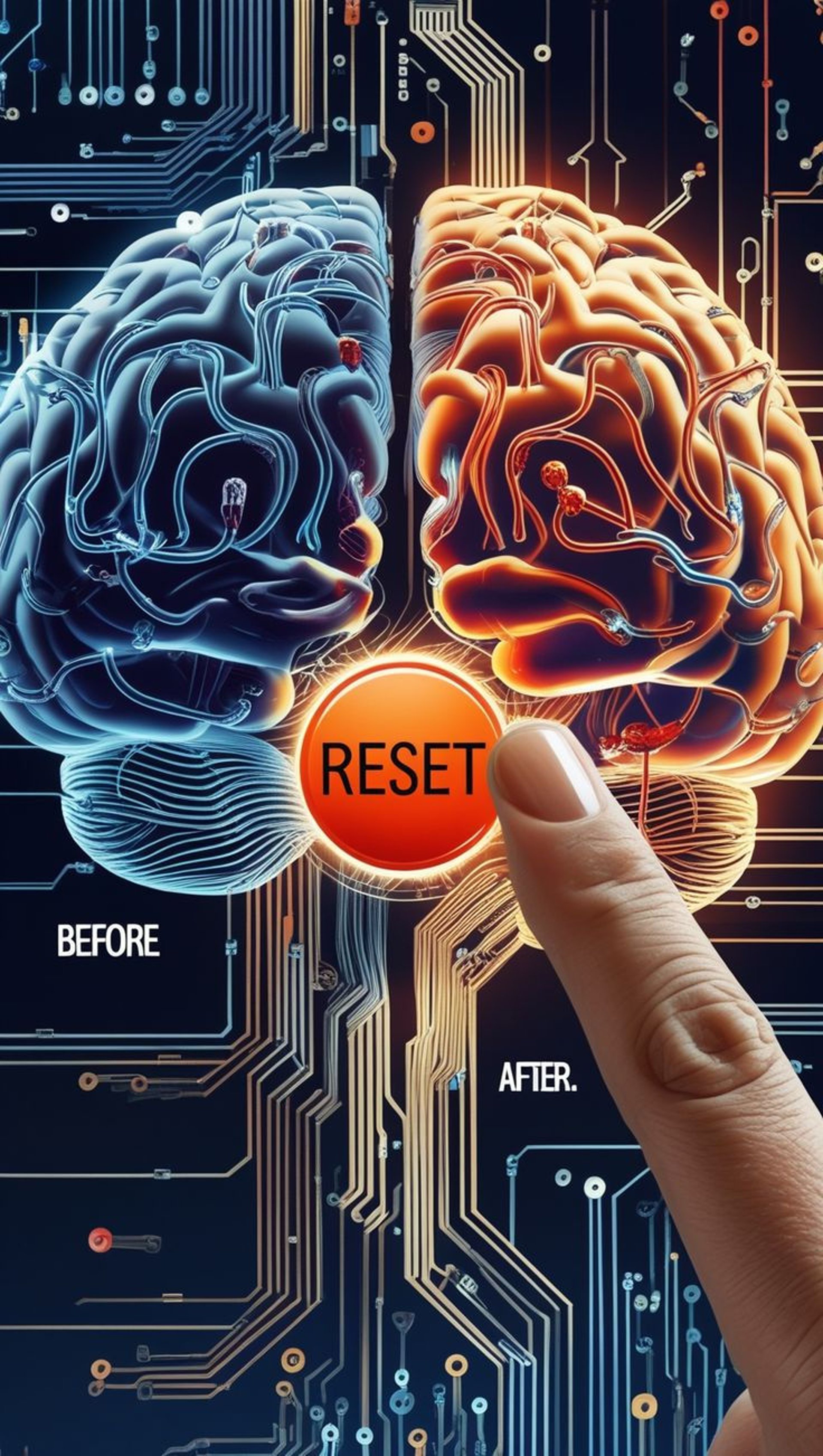
Why you feel like something is missing (and why it’s not random)
That quiet feeling that something is missing isn’t random. It’s your body trying to regulate itself — and if you don’t understand it, you’ll keep choosing the wrong ways to fix it.
UNDERSTANDING PATTERNS
Alena
3/25/20264 min read
There are moments that don’t look serious from the outside, but inside they feel loud.
You’re sitting quietly. Maybe with a drink. Maybe just pausing for a second in the middle of your day. Nothing is happening. No crisis, no conflict.
And yet, something feels… off.
Not pain. Not sadness. Just a quiet, persistent feeling like something is missing. Like something inside you is asking for something, but you don’t know what exactly.
And that’s where it begins. Your mind starts offering solutions.
Maybe go out. Maybe buy something. Maybe message someone.
Maybe distract yourself just enough to not feel it.
Not because you truly want any of those things,
but because you want that feeling to stop. You want to DO NOT feel BORING anymore.
That subtle tension. That inner restlessness. That quiet “not enough.”
Most people don’t stay with that moment.
They move. They act. They fix it the fastest way they only know how to..
And for a while, it works.
Until it comes back again.
I remember sitting in that exact state. For almost a day, that feeling was following me. Not aggressively, not dramatically - just present enough to not be ignored. It would come and go, but never fully leave.
And with it came the familiar options:
spend money, go out, drink, reach for someone who could temporarily fill the space.
I knew those patterns. I’ve seen where they lead.
So this time, I didn’t follow. I paused.
Not to suppress the feeling - but to understand it.
What if this isn’t random? What if this is not a lack of discipline, but a signal?
That question changes everything.
Because the moment you ask it,
you stop treating yourself like a problem to fix
and start treating yourself like a system to understand.
We like to believe our emotions are purely psychological. That they come from thoughts, memories, meanings.
But there is another layer underneath. Biology. Chemistry. Regulation. Your body is constantly adjusting itself through invisible processes:
hormones rising, dropping, interacting. You don’t see them. You don’t measure them in the moment.
But you feel them. And the moment you feel them, they become your thoughts, your wishes, your impulses. That’s where psychology begins -
not separate from the body, but emerging from it.
If you don’t understand this, your behavior will always feel confusing. Because you’ll only see the surface:
“I want something.”
“I feel like doing this.”
“I can’t control it.”
But underneath, something much more precise is happening.
For those who into crypto trading, it helps to imagine it like a chart. If you’ve ever looked at a trading chart - you know it’s never just one straight line. There are movements, spikes, drops, fluctuations happening all the time. One line goes up, another reacts, the whole pattern shifts. If you don’t understand what you’re looking at, you enter at the wrong moment. You buy too late. You react too fast. You follow the movement instead of reading it.
And then you think the problem is your decision. But the real problem was - you didn’t understand the system.
For those who love cooking, I can explain it in such allegory: When you taste a dish, you don’t just say “something is wrong.” If you have experience, you can tell: There is not enough salt. Or too much. Or something is missing completely.
But if you don’t taste - you’re guessing. If you keep adding ingredients blindly, hoping it will fix the dish - you may overdo it or you may ruin it completely. Not because you’re bad at cooking, but because you’re not reading what’s already there.
Your internal state works the same way.
It’s not one thing. It’s a combination.
Different “ingredients” rising and falling at the same time:
stimulation
stress
emotional need
physical state
And depending on that balance, you feel a certain way.
If something is “too low,” you feel lack.
If something is “too high,” you feel pressure.
And your mind tries to correct it - the fastest way it knows how.
That’s where self-destructive behaviors come from. Not from weakness. From misinterpretation.
You feel something, but you don’t understand what it is. So you respond with whatever is available.
Food. Spending. Attention. Distraction.
Not because it’s the right solution -
but because it’s the only solution you know.
But there is another way to meet that moment.
Instead of asking: “What do I want right now?”
You pause long enough to ask: “What is this feeling actually asking for?”
At first, the answer won’t be clear. It takes time, like learning to read a chart or developing taste in cooking.
But slowly, patterns begin to show. You start noticing that not every urge is the same.
Some come from restlessness.
Some from emptiness.
Some from tension.
Some from a need for closeness.
And once you see that, you stop reacting blindly.
You don’t need to suppress yourself. You don’t need to fight yourself. You just stop following every impulse as truth. Because now you understand - it’s not random.
You were never “just craving something.” Your system was reacting in real time. And without awareness, you were trying to fix the feeling instead of understanding it.
The shift is small, but powerful.
Next time that feeling appears - don’t rush to close it. Stay with it for a moment.
Taste it, like you would taste a dish.
Observe it, like you would read a chart.
Let it tell you what’s actually missing.
Because not every feeling needs to be satisfied.
Some need to be understood.
if you want to go deeper
what your cravings actually mean (dopamine, serotonin, cortisol)
Understand how different internal states create specific urges - and why not all cravings should be treated the same.
why you overthink everything and can’t stop
Break down the mental loops that keep you stuck in your head - and how they’re connected to your internal state.you don’t have a type - you have a pattern
See how your choices in people and situations are not random, but driven by unconscious patterns you keep repeating.