
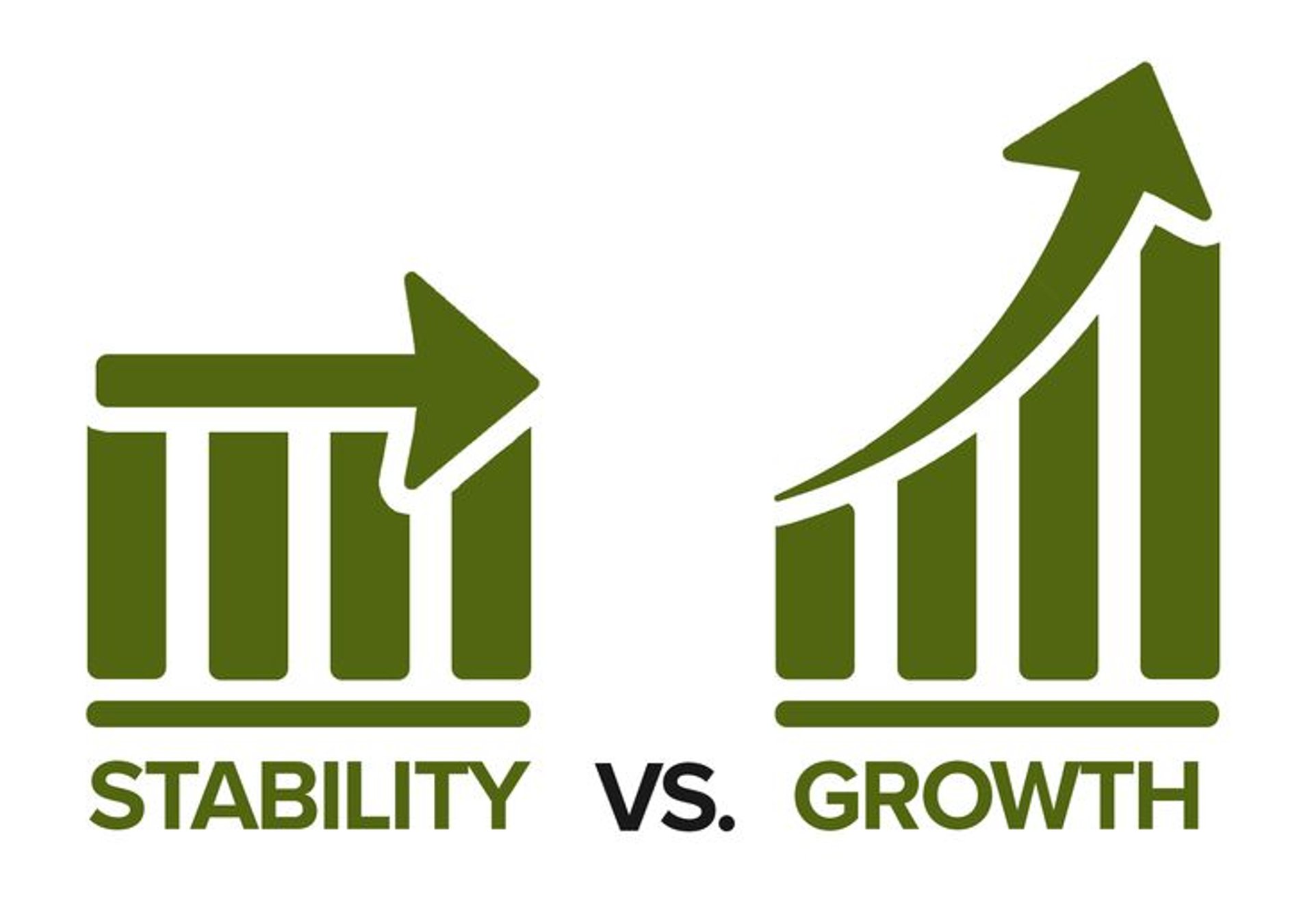
Growth vs stability: why people want different kinds of love
ome people want a relationship that helps them grow. Others want a relationship that helps them feel safe. The problem starts when they choose each other.
UNDERSTANDING PATTERNSRELATIONSHIPS
Alena
5/1/20266 min read
The hidden difference between people in relationships
Not everyone wants the same kind of love.
Some people want a relationship that feels peaceful, predictable, and stable.
Others want a relationship that feels alive, challenging, and growth-enhancing.
And most relationship problems start because people assume their version of love is the “normal” one.
But it is not. It is just their version.
Some people want stability
For some people, love means having a safe place to return to. They do not need constant excitement. They do not need deep emotional analysis every week. They do not need the relationship to transform their identity.
They want something steady.
A familiar person.
A predictable rhythm.
A sense of order.
A life that feels emotionally secure.
For them, love may sound like: “I just want to come home and know you are there.”
And honestly, there is nothing wrong with that. Stability is not boring to everyone. For some people, stability is the deepest form of safety.
Why stability can feel so powerful
If someone has lived through chaos, instability, betrayal, emotional confusion, or constant uncertainty, stability can feel like oxygen.
Routine becomes calming. Predictability becomes beautiful. Familiarity becomes intimacy. Not because the person is shallow. But because their nervous system may finally feel safe enough to rest. So when someone says they want a simple relationship, that does not automatically mean they lack depth. Sometimes it means they have had enough storms.
Some people want growth
Other people experience love differently. For them, love is not just comfort. Love is expansion. They want a relationship that makes them think, question, reflect, evolve, and become more conscious.
They want emotional depth. They want meaningful conversations. They want challenge. They want the relationship to feel alive.
For them, love may sound like: “I want us to become more through this connection.” And there is nothing wrong with that either.
Some people do not feel connected through routine. They feel connected through movement, exploration, and transformation.
Why growth can feel like love
A growth-oriented person may feel loved when the relationship gives them:
emotional depth
honest conversations
self-discovery
shared challenges
new experiences
intellectual or spiritual expansion
They do not want to stay exactly the same. They want the relationship to become a space where both people can evolve.
But here is the difficult part. Growth is not always comfortable.
Growth can threaten the relationship
Growth changes people. It changes what they need. It changes what they tolerate. It changes how they see themselves. It changes what kind of future they want.
This is why growth can feel like betrayal to someone who values stability.
Because when one person changes, the old relationship structure is no longer guaranteed.
The partner may feel:
“Why are you changing?”
“Why can’t things stay how they were?”
“What if I lose you?”
And sometimes, that fear is not irrational. Because yes, growth can change the relationship. And not every relationship survives it.
The phrase that explains this clearly
One of the strongest ideas from one of my studies module was:
Growth is treason.
Not because growth is bad. But because growth can betray the old version of the relationship. The promises you made from one stage of life may not fit the person you become later.
A child may sincerely promise to buy their caregiver an airplane one day. At that age, the promise is real. But when the child grows, they understand life differently. They may still love the person deeply, but their way of expressing love changes. The feeling may remain. The form changes. That is growth.
This happens in adult relationships too
At one point, you may genuinely want something.
A certain partner.
A certain lifestyle.
A certain future.
A certain kind of commitment.
And later, after you grow, you may realize: “This no longer fits who I am becoming.” That does not always mean the past was fake. It means you changed. And change has consequences.
Where relationships start breaking
The problem is not that one person wants growth and the other wants stability.
The problem is when they do not admit it.
One person wants movement. The other wants preservation.
One wants depth. The other wants peace.
One wants transformation. The other wants familiarity.
And then both start judging each other.
The growth-oriented person may think: “You are stagnant.”
The stability-oriented person may think: “You are never satisfied.”
But often, the real issue is not character. It is direction.
Neither side is automatically healthier
This is important. Growth is not always superior. Stability is not always weakness.
Some people use “growth” as an excuse for restlessness, drama, or never being satisfied.
Some people use “stability” as an excuse to avoid difficult conversations and stay emotionally asleep.
So the question is not: “Which one is better?”
The question is: “Which one is true for you - and is your partner moving in the same direction?”
The real compatibility question
Instead of asking: “Do we love each other?”
Ask: “Do we want the same kind of relationship?”
Because love alone does not answer this.
You can love someone deeply and still want a completely different emotional environment.
One person may want peace. The other may want transformation.
One person may want routine. The other may want happenings - those unusual, memorable experiences that break the ordinary and make life feel alive.
And if both people cannot negotiate that difference, love becomes frustration.
Rituals and happenings
Relationships often move between two forces:
Rituals
Repeated actions that create stability. Examples:
morning coffee together
weekly dinner
shared religious practices
familiar routines
coming home to the same person
Rituals say: “This is safe. This is ours.”
Happenings
Unusual moments that create aliveness. Examples:
surprise plans
trying something new
deep unexpected conversations
spontaneous trips
breaking routine in meaningful ways
Happenings say: “We are still alive. We are still discovering.”
Both matter. But different people need different balances.
The hidden conflict
One partner may see routine as love. The other may see the same routine as emotional death.
One partner may see novelty as exciting. The other may see the same novelty as destabilizing.
That is why people can be in the same relationship and experience it completely differently.
One feels safe. The other feels trapped.
One feels grounded. The other feels bored.
One feels connected. The other feels unseen.
What actually helps
The first step is honesty.
You need to know what kind of love you are actually asking for. Not the romantic answer. The real answer.
Ask yourself:
“Do I want this relationship to give me peace, growth, or both?”
“How much change can I handle?”
“How much routine do I need to feel safe?”
“Do I feel alive here, or only stable?”
“Do I feel safe here, or only stimulated?”
These questions matter because they reveal your actual relationship needs. Not the ones you think you should have.
The relationship can work if both people can negotiate
A growth-oriented person does not need to destroy stability.
A stability-oriented person does not need to kill growth.
A healthy relationship can include both. It can have rituals that create safety. And happenings that create aliveness. It can offer comfort without becoming stagnant. It can offer growth without becoming chaotic.
But only if both people are willing to understand what the other person needs.
When it cannot work
Sometimes the difference is too big.
One person wants a life of movement. The other wants a life of order.
One person wants inner transformation. The other wants emotional simplicity.
One person keeps becoming. The other keeps protecting what already exists.
And at some point, love may not be enough to bridge that gap.
That is not always failure. Sometimes it is just truth.
The deeper truth
A relationship should not trap you in who you used to be.
But it should also not force you into growth you never wanted.
Real love has to respect both:
the need for safety
the need for becoming
The art is knowing which one is needed now.
Final thought
Some people want love that feels like home. Some people want love that feels like becoming. Some people need both.
The problem starts when you ask for transformation from someone who only wants peace, or ask for peace from someone who is built for transformation.
So maybe the real question is not: “Do they love me?”
Maybe the real question is: “Are we building the same kind of life through this love?”
If you want to go deeper
Relationships
What are you really looking for in a relationship
→ helps you define what kind of emotional experience you are actually seeking.Why people get into relationships: understanding the psychology of human needs
→ explains the deeper needs that drive people toward love, stability, intimacy, or growth.What love actually IS (and why most people get it wrong)
→ separates love from fantasy, attachment, intensity, and social expectations.
Understanding patterns
You don’t have a type - you have a pattern
→ shows how repeated attraction often comes from deeper emotional programming.You’re not choosing love. You’re following a script.
→ explains how cultural, emotional, and family scripts shape what you expect from relationships.You don’t feel “chemistry.” You feel layers activating.
→ helps explain why growth-oriented or unstable dynamics can feel intense and meaningful.
Overthinking & inner struggles
Why you want closeness… and still pull away
→ explains the internal conflict between craving intimacy and protecting yourself from exposure.Why you feel like something is missing (and why it’s not random)
→ explores why a “good” relationship can still feel incomplete when deeper needs are unmet.