
Why attraction can feel addictive: dopamine, oxytocin, cortisol, and the trauma bond loop
Attraction can feel addictive when reward, bonding, stress, and relief get mixed together. Dopamine can make you chase the high, oxytocin can deepen attachment, and cortisol can keep your nervous system activated. This article explains why unstable relationships can feel so intense, how trauma bond loops form, and why craving someone does not always mean the connection is healthy or meant to last.
UNDERSTANDING PATTERNS
Alena
5/11/202613 min read
Why attraction can feel addictive: dopamine, oxytocin, cortisol, and the trauma bond loop
Sometimes attraction does not feel calm.
It feels like craving.
You know the person is inconsistent, but you still wait for their message. You know the connection makes you anxious, but when they finally give you attention, your whole body relaxes. You know something is not fully healthy, but the pull feels stronger than logic.
And this is where people get confused.
They start thinking:
“If I feel this much, it must mean something.”
“If I cannot forget them, maybe they are special.”
“If my body reacts so strongly, maybe this is love.”
“If I still crave them after everything, maybe they are meant for me.”
But emotional intensity is not always proof of love.
Sometimes it is chemistry.
Sometimes it is attachment.
Sometimes it is stress.
Sometimes it is reward-seeking.
Sometimes it is the nervous system trying to get relief from the same person who created the pain.
This is why attraction can feel addictive.
Not because the person is magical.
But because your body, brain, and emotional system may have started connecting them with reward, bonding, stress, and relief at the same time.
And when these forces mix together, the attraction can feel almost impossible to think your way out of.
[connect to existing link: What your cravings naturally mean: dopamine, serotonin, cortisol]
Attraction is not only a feeling
Attraction is often described as something romantic.
Chemistry. Spark. Desire. Butterflies. Magnetism. Energy. Pull.
But psychologically, attraction is not just one thing. It is layered.
You may be attracted to someone’s body, energy, confidence, intelligence, mystery, emotional availability, emotional unavailability, lifestyle, status, danger, kindness, voice, attention, or the version of yourself you become around them.
Sometimes you are attracted to the person.
Sometimes you are attracted to the fantasy.
Sometimes you are attracted to the challenge.
Sometimes you are attracted to how they make you feel when they finally choose you.
That last part is important.
Because in unstable dynamics, the attraction often becomes less about the person and more about the emotional cycle.
You are not only craving them.
You are craving the relief that comes when they stop being distant.
You are craving the high after uncertainty.
You are craving the moment when your nervous system finally says:
“Okay, we are safe again.”
But if the same person repeatedly makes you anxious and then becomes the person who calms you down, your system can start linking them with both danger and comfort.
That is when attraction becomes confusing.
Because the body starts reading relief as love.
[connect to existing link: The matrix of love, Alena psycrafter signature framework]
Dopamine: the chase, the reward, and the high
Dopamine is often connected with reward, motivation, anticipation, and wanting.
It is not simply the “pleasure chemical.” More accurately, dopamine is heavily involved in pursuit. It makes you move toward something. It says, “Maybe this will feel good. Go get it.”
In attraction, dopamine can be activated by attention, flirting, fantasy, desire, messages, anticipation, uncertainty, and emotional reward.
This is why the early stages of attraction can feel so energizing.
You think about them.
You check your phone.
You imagine possibilities.
You replay small moments.
You wait for the next sign.
You feel excited by the unknown.
In a healthy connection, dopamine can simply be part of romantic excitement.
But in unstable attraction, dopamine can become tied to unpredictability.
When someone gives attention inconsistently, your brain may start working harder for the reward.
Not because the reward is better.
But because it is uncertain.
A consistent person replies, shows up, communicates clearly, and behaves predictably. This can feel safe, but to a nervous system used to chaos, it may not create the same dramatic high.
An inconsistent person creates emotional suspense.
Will they reply?
Do they care?
Are they pulling away?
Did I do something wrong?
Are they coming back?
Was it real?
Am I special to them?
Then suddenly, they give attention.
A message.
A compliment.
A soft moment.
A return.
An apology.
A sign of interest.
And because your system was already tense, the reward feels bigger.
That is the trap. The high is not only from love. The high is from relief after uncertainty. This is how dopamine can make unstable attraction feel stronger than stable attraction.
Oxytocin: the bond that makes leaving harder
Dopamine may pull you toward the reward. Oxytocin can deepen the bond.
Oxytocin is connected with closeness, bonding, touch, affection, trust, caregiving, and emotional warmth. It helps create the feeling of connection.
But here is the part people do not like to admit:
You can bond with someone who is not good for you.
Oxytocin does not check the person’s emotional maturity before creating attachment.
It does not ask:
“Is this person consistent?”
“Are they honest?”
“Are they emotionally safe?”
“Can they meet your needs?”
“Are they capable of healthy love?”
Your body can bond through closeness, vulnerability, affection, intimate moments, emotional conversations, shared pain, repair after conflict, and repeated contact.
That bond can feel real because it is real.
But real does not automatically mean healthy.
This is why people often say:
“But we had such a deep connection.”
Maybe you did.
But deep connection is not the same as stable relationship structure.
A person can make you feel close and still be unavailable.
A person can open up to you and still not be consistent.
A person can be tender sometimes and still hurt you repeatedly.
A person can create emotional bonding without having the capacity to build a healthy relationship.
This is where many people get trapped.
They treat the bond as evidence that the relationship must continue.
But sometimes the bond only proves that your body attached.
It does not prove that the relationship is safe enough to build your life around.
[connect to existing link: Why your body craves connection: oxytocin, endorphins, and emotional bonding]
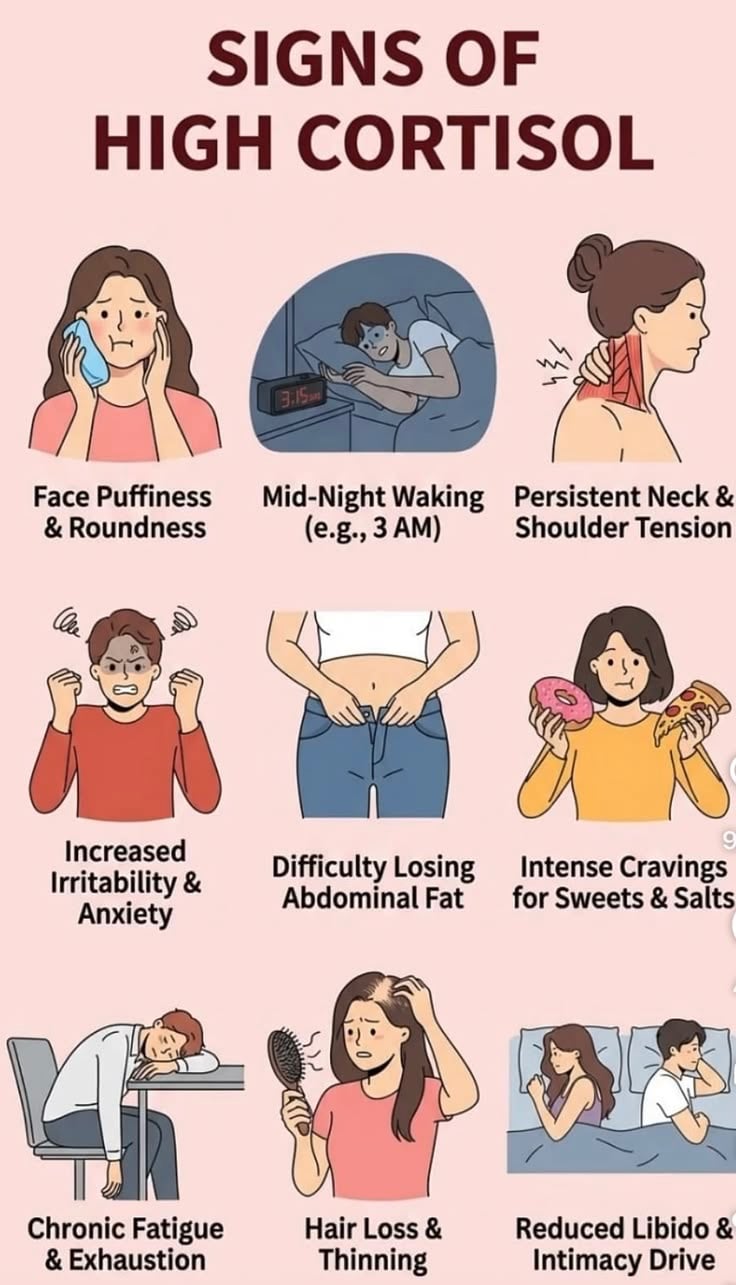
Cortisol: when stress becomes part of the attraction
Cortisol is often associated with stress.
In unstable attraction, stress can become part of the emotional pattern.
You may feel anxious when they are distant. You may feel activated when they are unclear. You may feel tense when their tone changes. You may feel restless when they disappear. You may feel emotionally threatened when the relationship becomes uncertain.
This stress is not pleasant.
But it can become familiar.
And sometimes, familiar stress can be mistaken for passion.
That is a hard truth.
If your body is used to love feeling unpredictable, then calm love may feel strange at first. You may not recognize peace as attraction. You may look for intensity because your system learned to associate love with emotional activation.
So when someone triggers anxiety, your body may interpret the activation as chemistry.
Butterflies are not always romance.
Sometimes they are nervous system warning signs.
The question is not only:
“Do I feel something?”
The better question is:
“What kind of feeling is this?”
Is this warmth?
Is this safety?
Is this curiosity?
Is this desire?
Is this fear?
Is this anxiety?
Is this emotional hunger?
Is this the need to win someone’s approval?
Is this my body trying to repair an old wound?
When cortisol becomes part of attraction, the relationship can feel urgent.
You feel like you need answers now. You need reassurance now. You need contact now. You need them to soften now. You need them to choose you now.
This urgency can make the connection feel powerful.
But urgency is not always love.
Sometimes urgency is your nervous system asking for safety.
[connect to existing link: Why you overthink everything and can’t stop]
The trauma bond loop: pain, relief, attachment
A trauma bond is not just “loving someone too much.”
It is a pattern where emotional pain and emotional relief become tied to the same person.
The cycle can look like this:
Tension.
Confusion.
Distance.
Anxiety.
Pain.
Then attention.
Warmth.
Apology.
Closeness.
Relief.
Then attachment becomes stronger.
The dangerous part is that the relief can feel like love.
After feeling anxious, ignored, rejected, or emotionally unsafe, even a small amount of warmth can feel huge.
A kind message can feel like medicine.
A soft tone can feel like hope.
A return after distance can feel like proof.
An apology can feel like transformation.
A romantic moment can make you forget the pattern.
But if the cycle keeps repeating, you are not only bonding with the person.
You are bonding with the loop.
Pain creates tension.
Relief creates reward.
Reward strengthens attachment.
Attachment makes it harder to leave.
The next pain hurts even more because now you are more attached.
This is why trauma bond loops can feel addictive.
It is not because the love is stronger.
It is because the nervous system is being trained through emotional highs and lows.
A stable relationship does not usually create that kind of dramatic cycle.
It may feel calmer, slower, less explosive, less cinematic.
But calm does not mean weak.
Sometimes calm is what healthy love actually feels like when your body is no longer chasing survival chemistry.
Codependency makes the loop stronger
Trauma bond loops become even stronger when codependency is involved.
Codependency is not only “I cannot live without you.”
Sometimes it is more subtle.
It is when someone else’s emotional state becomes the center of your emotional regulation.
If they reply, you calm down.
If they disappear, you spiral.
If they are loving, you feel worthy.
If they are cold, you feel abandoned.
If they choose you, you feel alive.
If they pull away, you feel like you are losing yourself.
This is not just attraction.
This is emotional dependency.
In codependent patterns, the person becomes the solution to the pain they are also helping to create.
That is why leaving feels so hard.
You are not only leaving a relationship.
You are leaving the person your nervous system has been using for relief.
This is why people return to relationships that hurt them.
Not because they are stupid.
Because the body is trying to get relief from the familiar source.
But the familiar source may also be the wound.
This is the brutal part of trauma bonding.
The person feels like medicine because they temporarily reduce the pain connected to them.
But real healing asks a deeper question:
Why does my nervous system need this person to feel okay?
And what would it take to bring that power back to myself?
[connect to existing link: Breakups hurt like withdrawal - and that’s why “just move on” doesn’t work]
Why unstable love can feel more intense than safe love
Unstable love often feels intense because it creates contrast.
Distance makes closeness feel bigger.
Coldness makes warmth feel more precious.
Uncertainty makes attention feel more rewarding.
Conflict makes repair feel more emotional.
Fear of loss makes small signs of love feel powerful.
This contrast can create the illusion of depth.
You think:
“No one makes me feel like this.”
But you need to ask:
What exactly are they making me feel?
Loved?
Or anxious and then relieved?
Chosen?
Or rejected and then temporarily reassured?
Connected?
Or addicted to emotional repair?
Alive?
Or constantly activated?
There is a difference.
Safe love may not always give the same dramatic spike because it is not constantly pulling you from fear to relief.
Safe love is not built on emotional whiplash.
It does not need to keep you guessing to keep you interested.
It does not need to disappear so its presence feels valuable.
It does not need to hurt you so comfort feels meaningful.
Safe love may feel less addictive because it is not designed like a chase.
But less addictive does not mean less real.
Sometimes it means your nervous system is finally not being manipulated by uncertainty.
Chemistry is information, not instruction
This is one of the most important things to understand:
Chemistry is information, not instruction.
Your attraction tells you something is activated.
It does not automatically tell you what to do.
You can feel chemistry and still choose distance.
You can feel desire and still choose self-respect.
You can feel bonded and still recognize the relationship is unhealthy.
You can miss someone and still know returning would harm you.
You can crave attention and still refuse to chase.
This is emotional maturity.
Not the absence of feeling.
The ability to hold feeling without obeying it blindly.
Many people treat chemistry like a command.
“I feel pulled, so I must follow.”
“I feel attached, so I must stay.”
“I feel jealous, so I must react.”
“I feel anxious, so I must check.”
“I feel craving, so I must contact.”
But feelings are not always instructions.
Sometimes feelings are signals.
A craving may signal unmet needs.
Anxiety may signal uncertainty.
Jealousy may signal insecurity or lack of trust.
Attachment may signal bonding.
Chemistry may signal attraction.
Pain may signal a wound.
Your task is not to shame the signal.
Your task is to interpret it wisely.
[connect to existing link: What love actually is and why most people get it wrong]
Why “but I feel it in my body” is not enough
A lot of people trust body feelings because they seem honest.
And yes, the body carries truth.
But the body also carries history.
Your body may respond to someone because they are safe.
Or because they are familiar.
Or because they resemble an old pattern.
Or because they activate desire.
Or because they trigger abandonment fear.
Or because they create stress and then relief.
Or because they touch a wound you still want to repair.
So when you say, “I feel it in my body,” that matters.
But it is not the end of the analysis.
It is the beginning.
The next question is:
What is my body recognizing?
Is it recognizing love?
Is it recognizing danger?
Is it recognizing familiarity?
Is it recognizing chemistry?
Is it recognizing a chance to finally be chosen?
Is it recognizing an old emotional role?
The body can tell you that something is powerful.
But it cannot always tell you whether that power is healthy.
That is why you need both: body awareness and psychological discernment.
Feeling is not enough.
Pattern recognition matters.
How to know if attraction is becoming addictive
Attraction may be becoming addictive when your emotional state depends too heavily on the person’s behavior.
Some signs:
You feel calm only after they reply.
You keep checking their online activity.
You cannot focus because you are waiting for reassurance.
You feel high when they give attention and low when they withdraw.
You ignore repeated red flags because the good moments feel too good.
You confuse small signs of affection with proof that the whole relationship is changing.
You feel more obsessed when they become less available.
You keep explaining their behavior instead of observing the pattern.
You are attached to potential more than reality.
You feel like leaving them would destroy you, even though staying is already hurting you.
This does not mean you are weak.
It means your system may be caught in a reward-stress-bonding loop.
And once you recognize the loop, you can start stepping out of it.
But you cannot heal what you keep romanticizing.
That is why honesty matters.
Not harsh self-judgment.
Honesty.
How to start breaking the loop
Breaking an addictive attraction pattern does not usually happen through one big declaration.
It happens through repeated choices that retrain your system.
First, stop feeding the uncertainty.
If checking their profile makes you spiral, that is not “just curiosity.” That is emotional self-harm in a socially acceptable outfit. You are giving your nervous system more material to obsess over.
Second, stop using their attention as proof of your worth.
Their reply does not make you valuable. Their silence does not make you disposable. Their inconsistency says something about the relationship structure, not your human worth.
Third, separate fantasy from data.
What are they actually doing?
Not what they promised.
Not what they could become.
Not what they were in the beginning.
Not what you feel they are deep down.
What is the repeated pattern?
Fourth, regulate before you react.
When your body is activated, do not immediately text, accuse, beg, explain, chase, or perform indifference. Calm the body first. Then decide.
Fifth, build other sources of reward and comfort.
Your nervous system needs new evidence. Work, people, self-care, movement, creativity, prayer, learning, friendship, therapy, and meaningful routines help your body remember that relief does not have to come from one person only.
This connects directly to rebuilding your life after a breakup or unstable bond: you need structure, support, and self-direction.
[connect to existing link: After a breakup, rebuild your life in three parts: work, people, and self]
Healing does not mean becoming cold
Some people think the solution is to stop feeling deeply.
No.
The solution is not to become cold. The solution is to become conscious.
You can be passionate and still be discerning. You can be romantic and still observe patterns. You can feel chemistry and still ask whether the relationship is healthy. You can desire closeness and still require consistency. You can love deeply and still refuse emotional chaos.
The goal is not to kill your heart.
The goal is to stop letting chemistry drag your whole life by the neck.
Because attraction is powerful, but it is not enough.
You still need respect.
Consistency.
Emotional safety.
Mutual effort.
Honesty.
Capacity.
Reciprocity.
Shared reality.
A relationship structure that can actually hold the feelings.
Without structure, chemistry becomes a storm. And storms may feel exciting, but you cannot build a home inside one.
[connect to existing link: Love, sex and the truth most people don’t understand]
Final thought
Attraction can feel addictive when dopamine, oxytocin, cortisol, and emotional relief become tied to the same person.
Dopamine keeps you chasing the reward.
Oxytocin deepens the bond.
Cortisol keeps your nervous system activated.
Relief after pain makes the connection feel more powerful than it may actually be.
This is how a trauma bond loop can form.
Not because you are foolish.
Not because you are weak.
Not because you do not know better.
But because your body learned a pattern.
And what the body learns, the body can also unlearn.
Slowly.
Through awareness.
Through regulation.
Through distance from the cycle.
Through honest pattern recognition.
Through safer connection.
Through rebuilding your life around your own center again.
So when attraction feels addictive, do not only ask: “Why do I want them so much?”
Ask: “What is this attraction made of?”
Because sometimes the answer is love.
But sometimes the answer is reward, stress, bonding, fantasy, and relief wearing love’s clothes.
And once you can see the difference, you become harder to control by chemistry alone.
That is where freedom begins.
If you want to go deeper:
Understanding patterns
What your cravings naturally mean: dopamine, serotonin, cortisol
A useful starting point for understanding how cravings, mood, stress, reward-seeking, and emotional urges are connected to body chemistry.
Why your body craves connection: oxytocin, endorphins, and emotional bonding
A softer article on why the body craves closeness, touch, warmth, bonding, and emotional safety.
Why attraction can feel stronger when someone is inconsistent
A deeper look at unpredictable attention, intermittent reinforcement, and why inconsistency can make attraction feel more powerful than stable love.
Your hormones are not your destiny: how to work with your body without obeying every craving
A practical article about self-regulation, emotional discipline, and learning how to respect your body without letting every urge control your choices.
Relationship
Breakups hurt like withdrawal - and that’s why “just move on” doesn’t work
A related article on why romantic loss can feel like withdrawal and why craving someone does not automatically mean the relationship was healthy.
After a breakup, rebuild your life in three parts: work, people, and self
A practical guide to rebuilding your lifeworld through structure, support, and self-direction after a relationship ending.
The matrix of love, Alena psycrafter signature framework
A framework for understanding why attraction, love, sex, fantasy, attachment, and relationship structure happen across different layers.
What love actually is and why most people get it wrong
A broader article explaining why love is not only a feeling, but a layered experience involving needs, action, understanding, and reality.
Love, sex and the truth most people don’t understand
A related article on why physical chemistry, emotional longing, and real relationship compatibility are not the same thing.